
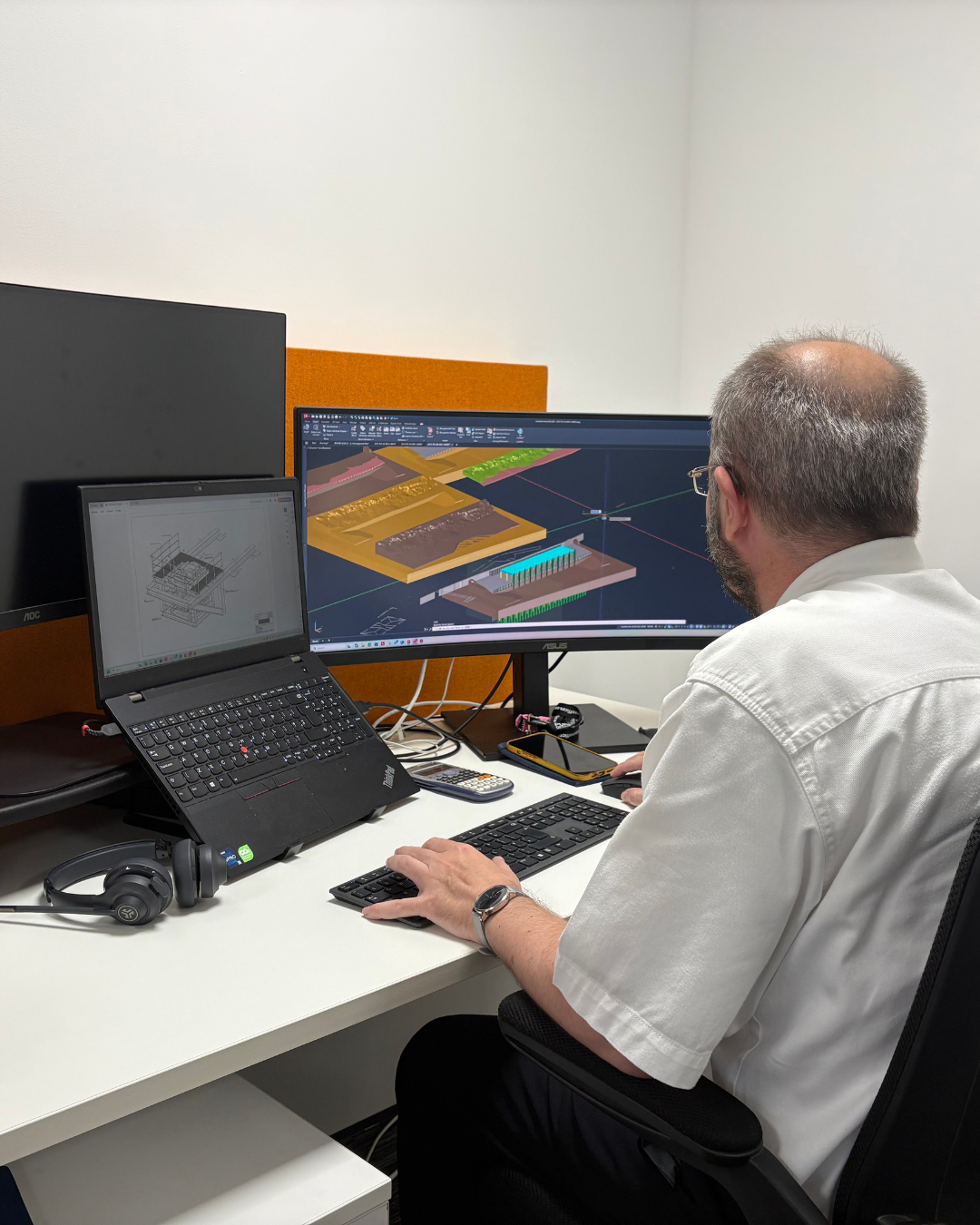
We’re often asked what it means to be a Maritime Engineer
What Is Maritime Engineering?
Most people have heard of civil engineering or structural engineering, but maritime engineering is a little less familiar.
Put simply, maritime engineering is the design, assessment and construction of infrastructure that interacts with water. That might be the sea, rivers, estuaries, docks or canals.
It's a specialist area of civil engineering because designing around water brings challenges that don't exist on land. Engineers have to consider tides, waves, vessel movements, corrosion, marine growth, environmental regulations and changing ground conditions—all before the first pile is installed or the first concrete is poured.
At TILT Engineering & Design, maritime engineering is what we do every day.
It's so much more than just ports and harbours
When people think of maritime engineering, they often picture huge commercial ports.
Those projects certainly form part of the industry, but maritime engineering covers a much wider range of structures.
Examples include:
Commercial ports
Marinas
Quay walls
River walls
Dry docks
Jetties and pontoons
Slipways
Berthing dolphins
Flood defences
Coastal protection schemes
Bridge crossings
Ferry terminals
Waterfront developments
Cable landfalls
Offshore energy infrastructure
Every one of these projects presents different engineering challenges.
Designing around water
Water changes everything.
Structures don't simply need to carry loads—they also need to withstand corrosion, tidal movement, wave forces, vessel impacts and decades of exposure to harsh marine environments.
That's why maritime engineering combines several disciplines, including structural engineering, geotechnical engineering, coastal processes and construction engineering.
The aim is always the same: designing infrastructure that is safe, durable and practical to build and maintain.
It's not just about new construction
A large part of our work involves existing assets.
Across the UK there are thousands of ageing marine structures that still play an important role in ports, harbours and waterfront developments.
Before deciding whether to repair, strengthen or replace these structures, it's important to understand their condition.
That's where inspections, condition surveys and asset management become just as important as design.
Helping clients get another twenty years from an existing structure can sometimes be a better engineering solution than replacing it entirely.
Every project is different
One week we might be designing temporary works for marine construction.
The next, inspecting a Victorian quay wall or supporting a planning application for a new marina development.
We also work on:
Marine engineering design
Maritime inspections
Marine licensing and consents
Barge stability calculations
Temporary works
Asset management strategies
Port development
Engineering reviews
Construction support
No two projects are ever quite the same—and that's one of the things we enjoy most about the work.
Why specialist experience matters
Marine structures behave differently from buildings or highways.
Experience matters because understanding how structures deteriorate in tidal environments, how ports operate and how construction works over water all influence the engineering decisions that follow.
It's rarely just about calculations.
It's about finding solutions that are practical, buildable and appropriate for the way the asset will actually be used.
Engineering for the long term
Good maritime engineering isn't simply about delivering today's project.
It's about creating infrastructure that continues to perform safely and efficiently for decades.
That means considering future maintenance, operational requirements, changing environmental conditions and whole-life costs from the earliest stages of design.
Done well, good engineering reduces disruption, extends asset life and helps clients get the best long-term value from their investment.
Frequently Asked Questions
-
The terms are often used interchangeably. In the UK, maritime engineering generally refers to civil engineering projects around the coast, rivers and ports, while marine engineering can also refer to ship and vessel machinery.
-
Maritime engineers design, inspect and assess structures built in or around water, including ports, marinas, quay walls, flood defences and waterfront developments.
-
Yes. Maritime engineering is a specialist branch of civil engineering focused on infrastructure in marine and coastal environments.
-
No. Many projects take place on rivers, canals, docks and inland waterways as well as coastal locations.
-
Absolutely. We work on everything from local inspections and engineering advice through to major port infrastructure projects.
Looking for maritime engineering support?
Whether you're planning a new waterfront development, maintaining an existing marine asset or need specialist engineering advice during construction, TILT Engineering & Design provides practical engineering solutions across the UK.
If you'd like to discuss a project, we'd be happy to help.