
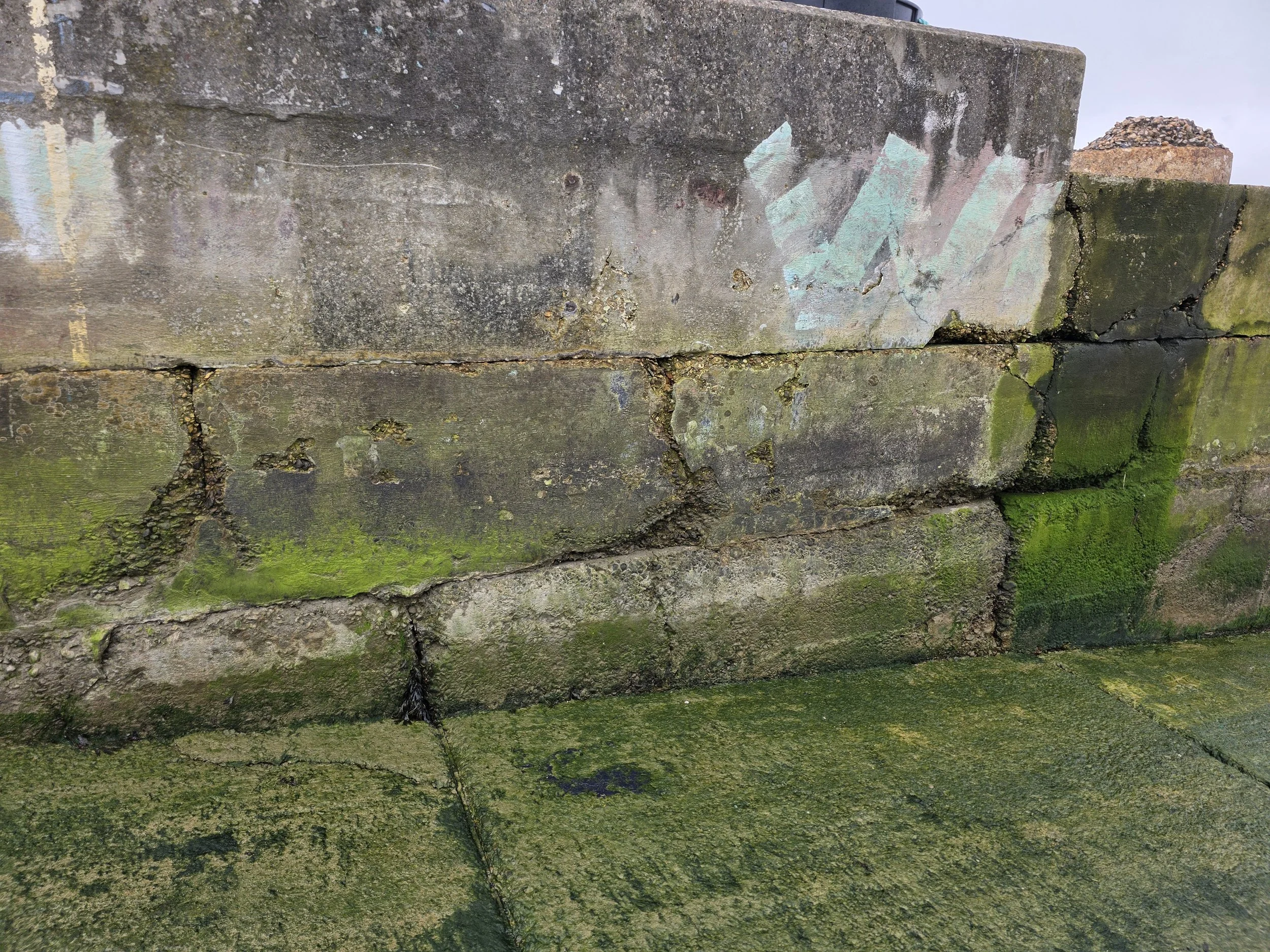
Can I Repair My Quay Wall Instead of Replacing It?
When clients contact us about a deteriorating quay wall, one of the first questions is usually:
"Are we looking at replacing the whole thing?"
The good news is that the answer is often no.
Just because a quay wall is showing signs of age doesn't automatically mean it's reached the end of its life. In many cases, targeted repairs, combined with a sensible maintenance programme, can significantly extend the life of the structure without the cost and disruption of complete replacement.
The key is understanding what you're looking at.
That's why we almost always recommend carrying out a condition assessment before making decisions about major repairs or replacement.
Every quay wall is different
No two marine structures deteriorate in exactly the same way.
Some suffer from corrosion.
Others develop cracking, movement or localised concrete damage.
Sometimes the structure itself is in surprisingly good condition, while components such as fenders, coping beams or tie rods need attention.
The challenge is identifying which defects are cosmetic, which should be monitored and which genuinely affect the performance of the structure.
That's something you can't determine from photographs alone.
What are we trying to achieve?
The aim isn't always to make the structure look new.
More often, it's about making sure it continues to do the job it was designed to do safely and efficiently.
That might mean repairing damaged concrete, replacing corroded steelwork, strengthening localised areas or improving protection against future deterioration.
In many cases, relatively modest interventions can add years—or even decades—to the life of a marine asset.
When is repair the right option?
Generally speaking, repairs are appropriate when the main structure remains fundamentally sound.
Typical examples include:
Local concrete repairs
Crack repairs
Protective coatings
Steelwork repairs
Fender replacement
Tie rod replacement
Joint repairs
Minor scour protection works
These types of repairs are often far more economical than replacing an entire quay wall.
Just as importantly, they usually cause much less disruption to port operations.
When might replacement be unavoidable?
There are occasions where replacement is the right engineering solution.
For example, where there has been widespread structural deterioration, significant movement or where the operational requirements of the berth have changed beyond the original design capacity.
Sometimes the wall itself is perfectly serviceable, but larger vessels, heavier loading or redevelopment plans mean a completely different structure is needed.
Even then, it's important not to jump to conclusions.
We've seen structures written off far too early simply because nobody had properly assessed their condition.
A condition survey should always come first
Before making decisions about repairs or replacement, we always recommend understanding the condition of the existing asset.
That doesn't necessarily mean expensive investigations.
Often a detailed visual inspection is enough to identify:
where deterioration is occurring
how severe it is
what's causing it
whether it's getting worse
what repair options are available
Only once you understand the condition of the asset can you make informed decisions about investment.
The cost of doing nothing
One of the biggest mistakes we see isn't carrying out the wrong repairs.
It's delaying them altogether.
Marine structures rarely fail overnight.
More often, deterioration gradually accelerates until relatively straightforward repairs become major engineering projects.
Small areas of corrosion become section loss.
Minor cracking allows water ingress.
Concrete deterioration exposes reinforcement.
Repair costs increase, operational disruption becomes greater and options become more limited.
Regular inspections and timely maintenance almost always cost less than reactive emergency works.
Thinking beyond today's repairs
Good asset management isn't about fixing defects as they appear.
It's about planning ahead.
When we inspect a quay wall, we're not just thinking about today's condition.
We're thinking about how that structure is likely to perform over the next five, ten or twenty years.
Sometimes the recommendation is to repair immediately.
Sometimes it's to monitor.
Occasionally it's to start planning for future replacement long before replacement actually becomes necessary.
That gives clients time to budget, programme works and avoid unexpected disruption.
There's rarely a single right answer
Engineering isn't black and white.
Two quay walls with similar defects may require completely different solutions depending on their age, construction, operational requirements and future plans.
That's why we don't believe in generic recommendations.
Every structure deserves an assessment based on its own condition and how it's expected to perform.
Frequently Asked Questions
-
Often, yes. The appropriate repair depends on the cause of the cracking and whether it's still moving.
-
No. Surface corrosion is common in marine environments and doesn't automatically indicate structural failure.
-
A condition assessment allows engineers to identify deterioration and determine whether further structural assessment is required.
-
Very often they can. Well-planned repairs and ongoing maintenance can significantly extend the operational life of marine structures.
-
The answer depends on the condition of the structure, future operational requirements and long-term plans for the asset.
Thinking about repairs?
If you're responsible for a quay wall that's beginning to show signs of deterioration, the first step isn't deciding whether to replace it.
It's understanding its condition.
At TILT Engineering & Design, we help clients assess existing marine structures, identify practical repair options and develop maintenance strategies that maximise the life of their assets while making the best use of available budgets.
If you'd like to discuss your structure, we're always happy to have an informal conversation.